Ballina, Australia
Ballina Coast High School
Ballina Coast High School (BCHS) opened in 2019. Its design was largely open-plan which brought challenges for teachers and students around aligning pedagogy with the spatial design. The school’s main internal “learning street” was noisy and distracting, with temporary grey screens creating a clinical, uninviting environment and offering minimal relief.
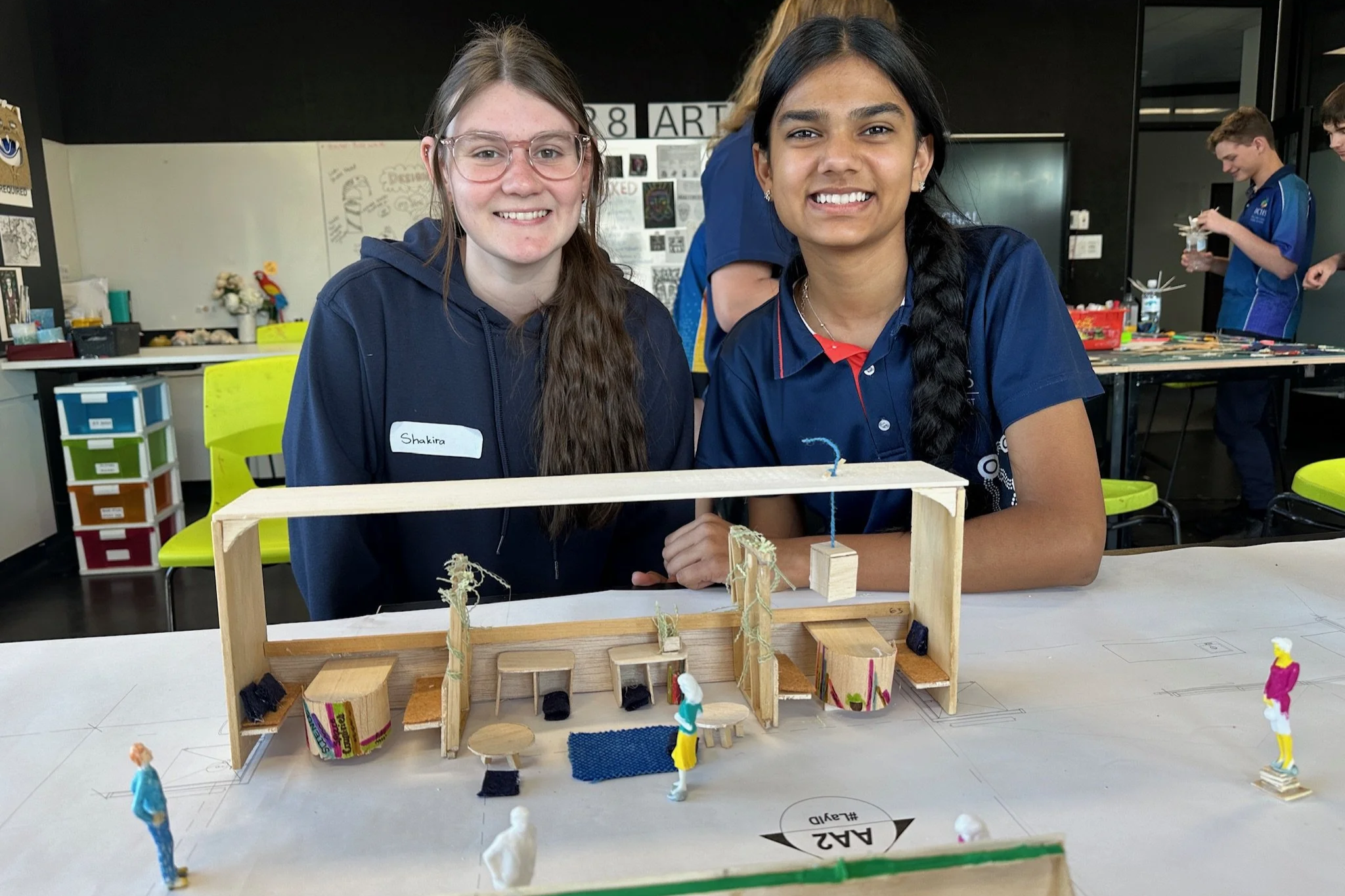
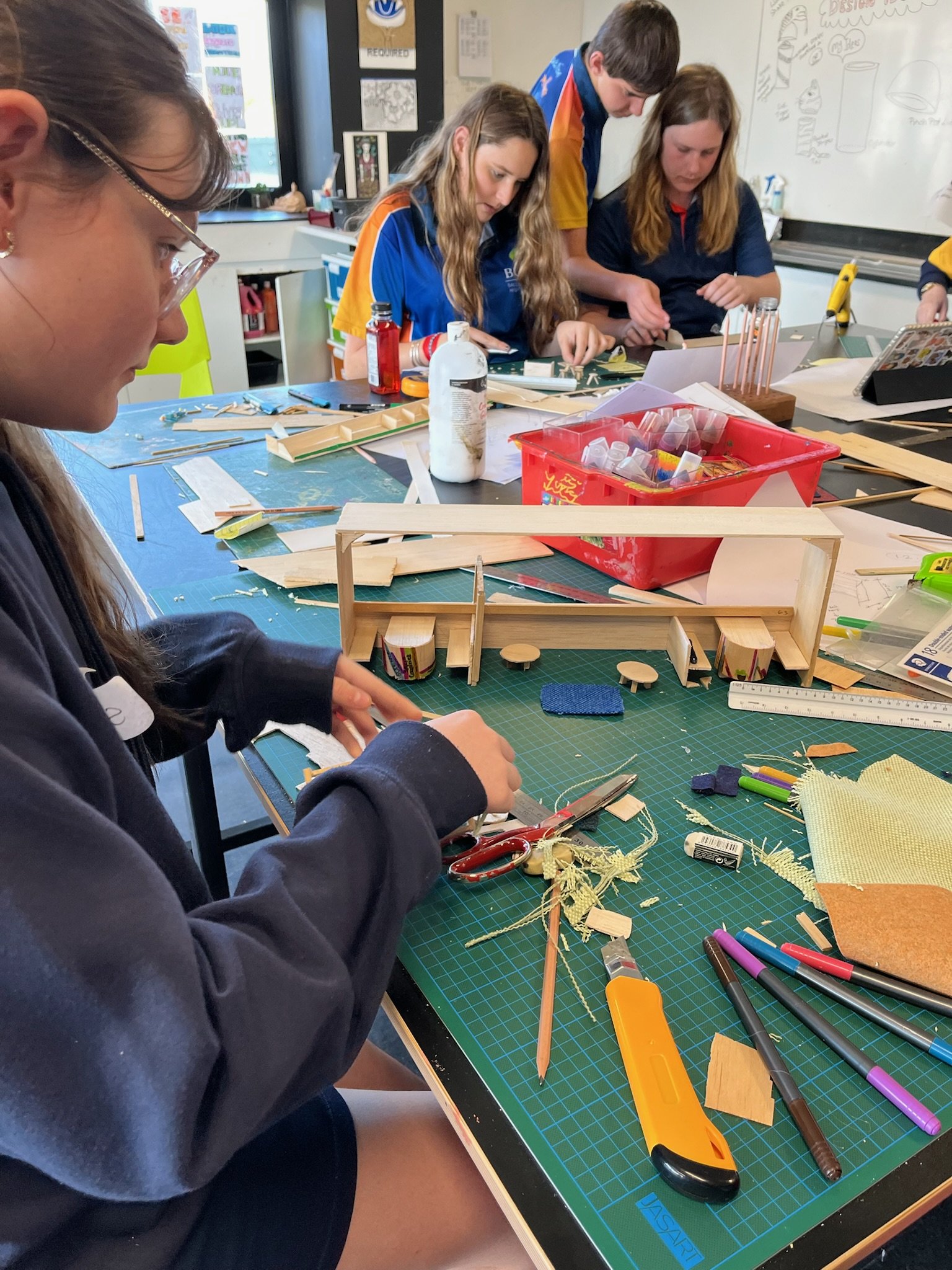
In October 2024, Project X began a ‘radical collaboration’ with BCHS where I partnered with Year 9 and 10 students on a research-informed design process to better understand the challenges of the street, and how we might address them. Students mapped movement patterns, identified favourite and least-favourite spaces, and examined the types of learning they wanted to support. Iterative workshops incorporated 1:1 prototyping and 1:20 scale model-making, enabling students to test and refine ideas through a practical, human-centred approach.
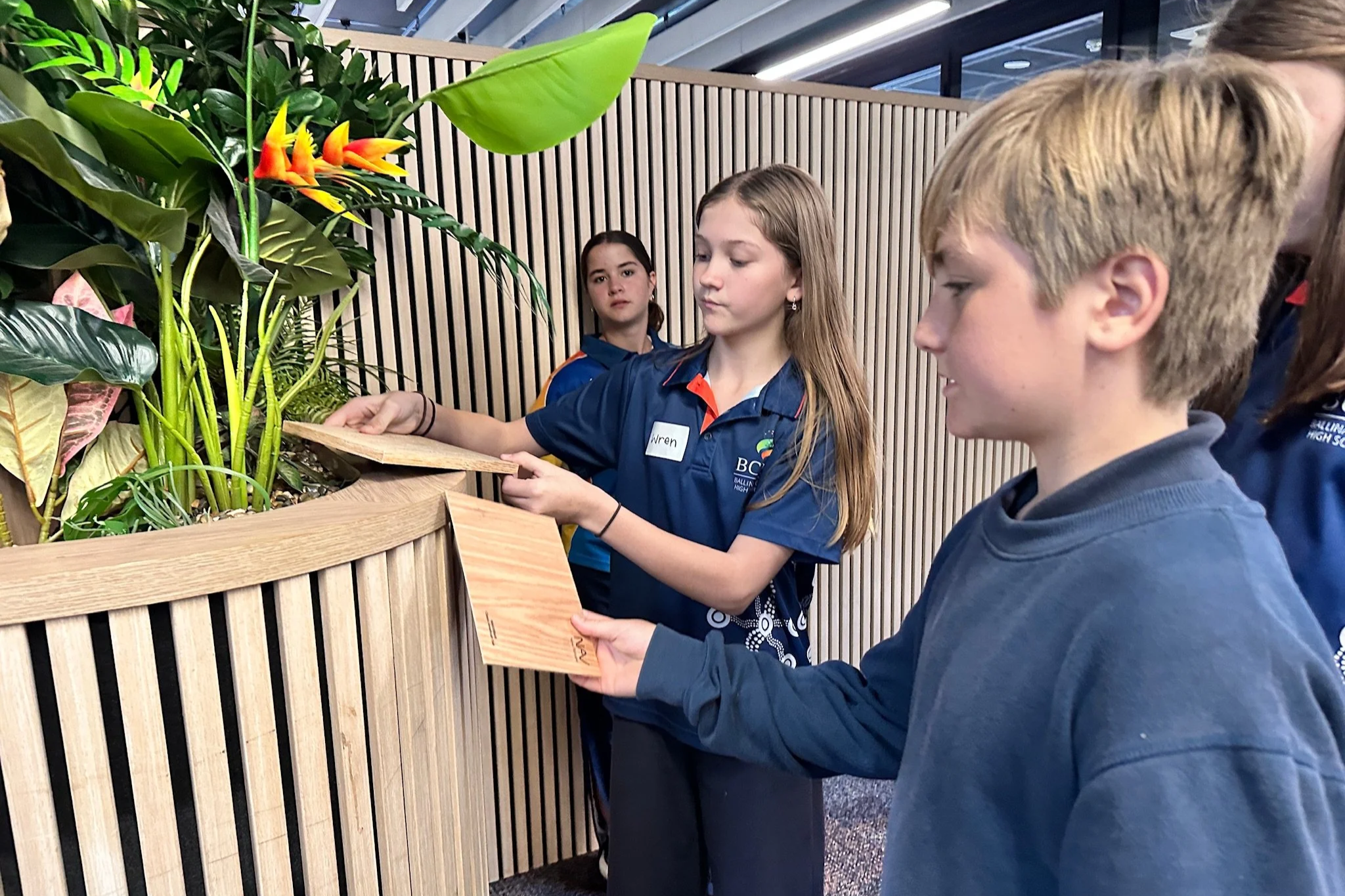
This work culminated in March 2025 with the construction and installation of a series of timber planter box screens, transforming the street into a calmer, more functional and engaging learning environment. A student-led Post-Occupancy Evaluation (POE) demonstrated positive impacts on behaviour and engagement, supported by school data showing reductions in off-task behaviour and suspensions.
Beyond the physical intervention, Project X catalysed school-wide change, building spatial literacy among staff and inspiring new thinking about how space, pedagogy and culture intersect. Students were included in staff professional learning sessions, embedding their insights and contributing to the co-design approach across the school.
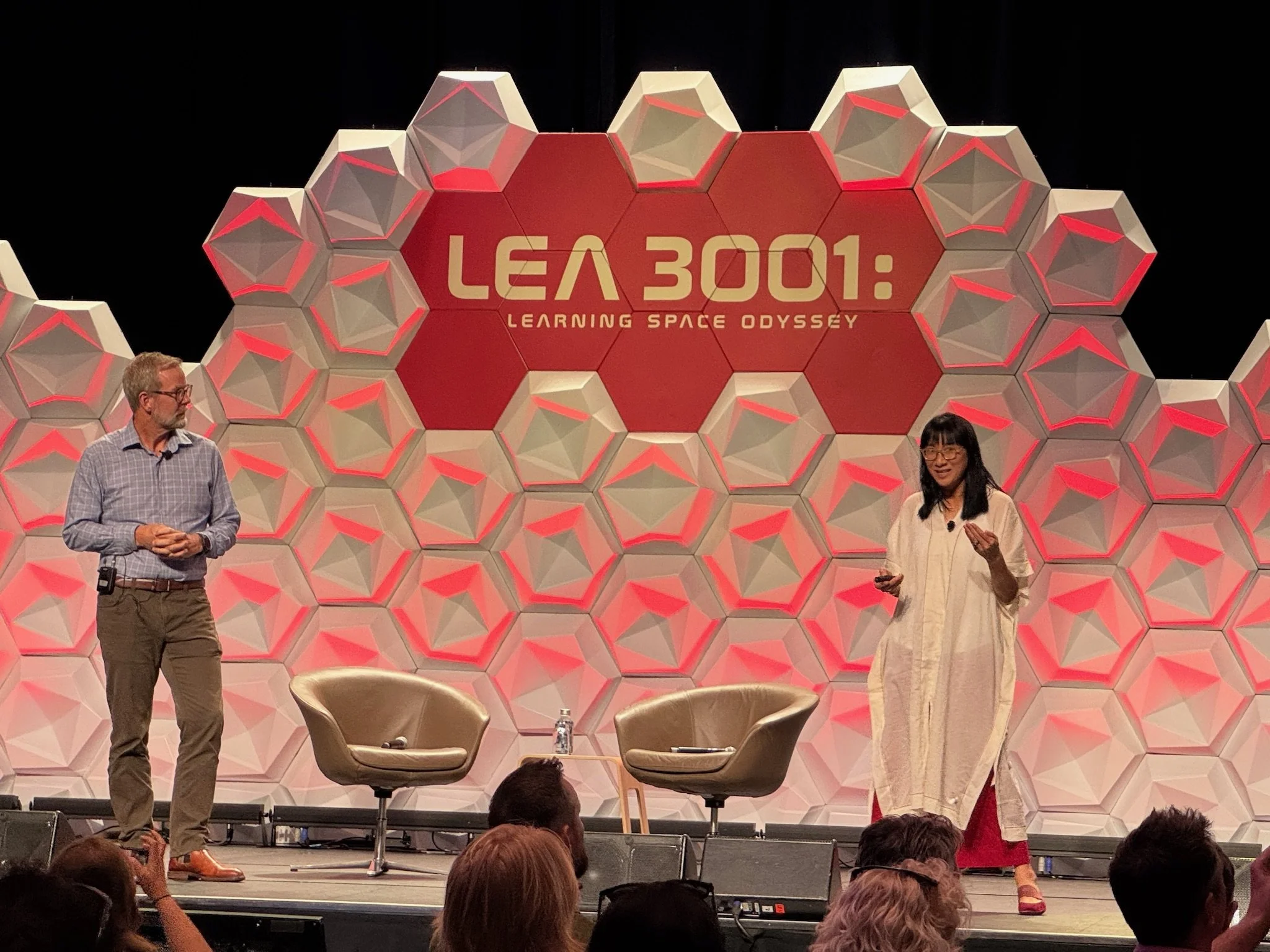
Students also shared their work externally, co-presenting with principal Peter Howes and myself at conferences and in media, providing rare opportunities for regional students to engage directly with industry and extend the impact of their learning.
Building on this success, in September 2026 we commenced Project Y, with students from Years 7 to 12. This time round, we’re reflecting on our learnings from the level 1 street to make improvements to level 2 and the music rooms.
This partnership with BCHS has demonstrated how student-led, research-informed innovation, can generate meaningful and lasting change inside the classroom and beyond.
Collaborators
Lena Teo, Jesslyn Massawan, Annsley Lo, Linda Lam